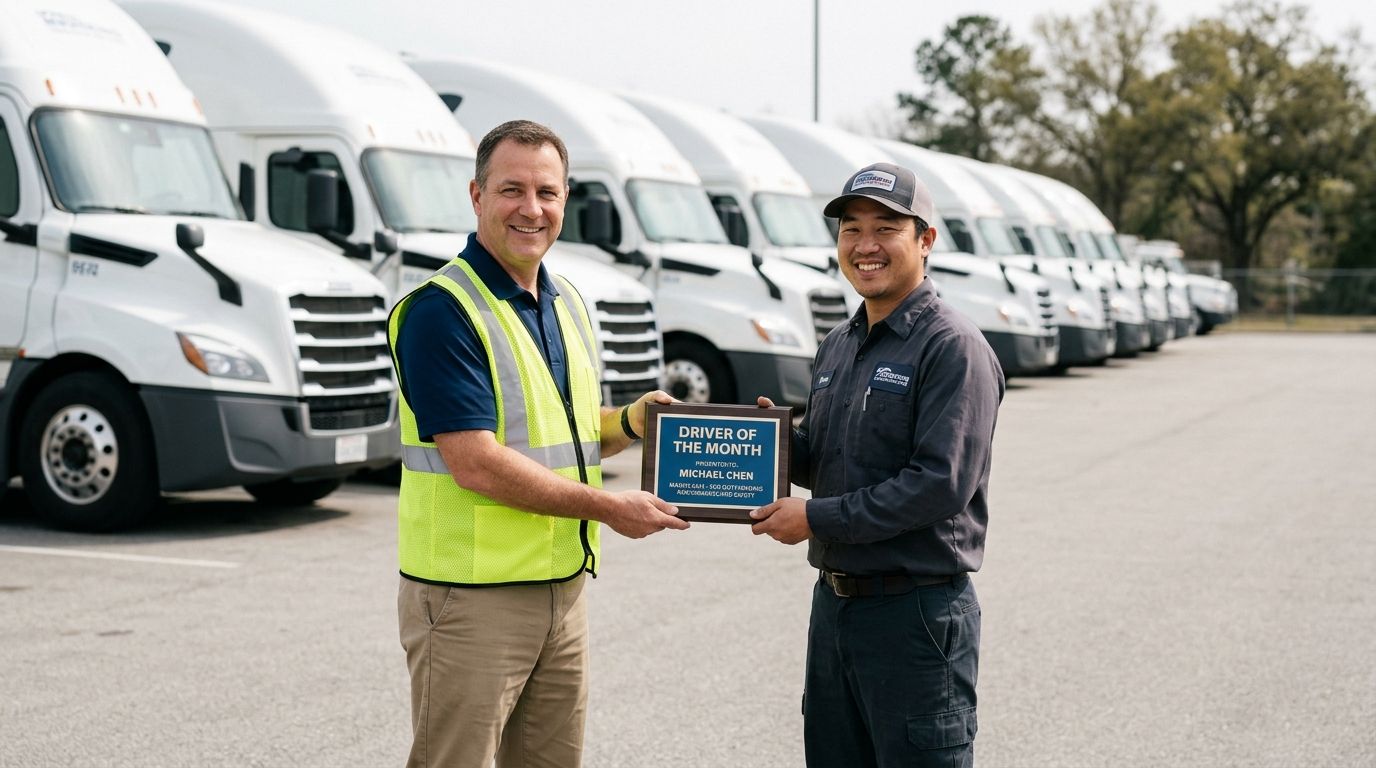
Safety incentive programs are a powerful tool for reducing accidents and improving your fleet's safety culture, but only if they are designed correctly. As a fleet owner or safety manager, you're constantly looking for ways to keep your team safe and your insurance premiums down. You may have even launched a safety bonus program with high hopes, only to see it have little to no impact. It’s a common frustration when programs are too complicated, reward the wrong things, or accidentally encourage your drivers to hide minor incidents to get a bonus. The classic "zero accidents" goal, while well-intentioned, often backfires by punishing honesty and creating a culture of fear around reporting. This guide will show you how to build a program that genuinely motivates the right behaviors, stays compliant, and gives you a real return on investment by focusing on proactive actions.

Why Most Safety Incentive Programs Fail
The core issue with failing programs is that they reward silence. An effective system celebrates proactive engagement, like reporting near-misses or consistently acing pre-trip inspections. To fix your program, you have to move away from only rewarding a clean record at the end of the quarter. Instead, you need to start celebrating the daily actions that create that clean record.
This means shifting your focus to things like:
- Valuing Participation: Reward your drivers for completing new training modules, showing up for safety meetings, or volunteering for a safety committee.
- Celebrating Good Habits: Recognize the drivers who consistently pass roadside inspections with no violations or maintain perfect HOS logs month after month.
- Encouraging Reporting: Create a system where reporting a near-miss or a minor vehicle issue is not just accepted, it's seen as a positive contribution to the safety of the entire fleet.
For more on building this kind of strong foundation, check out our guide on comprehensive fleet safety management.
Designing a Program That Motivates Proactive Behavior
A common mistake in safety programs is only rewarding the absence of accidents. While that sounds good, it can discourage your drivers from reporting near misses or minor incidents. The best safety incentive programs do not just focus on results; they reward the proactive behaviors that prevent accidents in the first place. This is about shifting your fleet’s mindset from reactive to proactive. Instead of just "don't crash," the goal becomes "do these things to be a safe professional."
So, what should you reward? Focus on the leading indicators, the measurable actions that directly contribute to safety and compliance.
- Consistent pre-trip inspections: Do not just check a box. Reward drivers who complete their DVIRs thoroughly and on time, every single day.
- Training module success: Recognize drivers who score highly on or consistently complete assigned safety training.
- Clean roadside inspections: Passing a Level 1, 2, or 3 inspection without a violation is a hallmark of a true professional. It deserves immediate recognition.
These actions are objective, easy to track, and take the guesswork out of what it means to be a "safe driver."
Defining Clear Goals and Rewards
For any program to gain traction, the goals need to be simple and the rewards need to be something your drivers actually want. First, define what success looks like in clear numbers. Is it a 15% increase in on-time training completion? Or maybe a 25% reduction in Hours of Service violations? Be specific.
When it is time to talk rewards, remember that cash is not the only motivator. A mix of rewards often works best.
- Gift cards to popular restaurants or retailers
- Extra paid time off (PTO)
- High-quality company-branded apparel
- Top pick of new equipment or priority on desirable routes
The easiest way to figure out what works? Just ask. Surveying your drivers is the best way to see what truly motivates them and helps build buy-in from the get-go. You can also learn about effective training in our detailed post on driver safety training programs.
Create a Tiered System for Long-Term Engagement
A one-time bonus is great, but it is quickly forgotten. A tiered system keeps your drivers engaged for the long haul. Think about creating levels like bronze, silver, and gold that drivers can earn over a quarter or a year. This "gamifies" the process and gives everyone a clear path to achievement.
By rewarding proactive behavior, you are not just preventing accidents; you are building a culture where your team takes ownership of safety. This mindset shift is the single most important outcome of a well-designed program.
This approach is backed by data from other high-risk industries. For instance, one major study found that worksites with structured safety incentive programs saw an incredible 44.16% reduction in lost-time injury rates. You can dig deeper into these findings and see what you should know about safety incentive programs for more context.
Choosing the Right Metrics to Track and Reward
There’s an old saying in business: what you measure is what you get. This is very true for safety incentive programs. A classic mistake is relying only on a simple "zero accidents" goal. This approach often hides underlying risks instead of fixing them. To build a program that drives real improvement, you need a balanced dashboard of metrics. This means tracking both leading and lagging indicators to get the full story of your fleet's safety performance. Understanding the difference between the two is the first step toward achieving proactive safety.
Leading vs. Lagging Indicators: What's the Difference?
Leading indicators are the proactive behaviors you want to see every day, while lagging indicators are the after-the-fact results. An effective program should heavily favor rewarding those leading, positive behaviors.
Leading Indicators (Proactive): These are the daily habits and actions that prevent incidents from happening. Think about rewarding your drivers for things like consistent, on-time DVIR completion, high scores on safety training modules, or maintaining perfect Hours of Service (HOS) logs for a month.
Lagging Indicators (Reactive): These are outcome-based metrics. They include things like the number of preventable accidents, moving violations, or CSA points accrued. While these are critical for tracking overall progress, they should not be the only thing you reward. Focusing only on lagging indicators means you are always looking in the rearview mirror.

The key is to connect clear goals with rewards your drivers value, and then add layers of recognition. This creates a system that keeps your team engaged and focused on being safe, day in and day out. To help you decide which metrics to include, here is a breakdown of common leading and lagging indicators.
Leading vs. Lagging Safety Indicators
| Indicator Type | Metric Example | What It Measures | Benefit |
|---|---|---|---|
| Leading | Timely DVIR completion | Your driver's diligence in pre-trip inspections | Catches mechanical issues before they become roadside violations or accidents. |
| Leading | Low harsh braking/speeding events | Smooth, defensive driving habits | Reduces accident risk, lowers fuel consumption, and decreases wear and tear. |
| Leading | 100% training module completion | Your driver's engagement with safety education | Ensures drivers are up-to-date on policies, procedures, and best practices. |
| Lagging | Number of preventable accidents | The ultimate outcome of unsafe acts or conditions | A critical, high-level measure of overall program failure or success. |
| Lagging | CSA violation points | Compliance with FMCSA safety regulations | Directly impacts your fleet's safety rating and insurance premiums. |
| Lagging | Workers' compensation claims | The frequency and severity of driver injuries | A direct financial measure of the human cost of safety failures. |
By building a program around proactive, leading indicators, you are not just reacting to incidents; you are actively preventing them from happening.
Using Telematics and Technology
Modern fleet technology makes tracking these metrics easier and more objective than ever. Telematics systems and AI dash cams give you a wealth of data on driver behaviors that used to be nearly impossible to monitor accurately. As you consider your options, our guide on how dash cameras for trucks can improve safety is a great resource.
Your goal is to build a dashboard of metrics that gives you a holistic view of driver and fleet performance. When your safety incentive program is built on this foundation, it drives meaningful and sustainable improvements. With the right data, you can set clear benchmarks and reward drivers for specific, positive actions, such as:
- Fewer harsh events: Maintaining a low number of hard braking, rapid acceleration, or speeding events per 1,000 miles.
- Clean inspections: Receiving no violations during a roadside DOT inspection.
- Perfect attendance: Completing all assigned safety training modules on time and attending all safety meetings.
Launching and Communicating Your New Safety Program
You have designed a solid program with clear metrics and motivating rewards. But even the best plans can fall flat without a strong launch. How you roll out your safety incentive program is just as important as the program itself. The goal is to get your team to understand the why behind the new structure, not just the what. Start by creating simple, clear communication materials. Think one-page flyers, short videos, or a dedicated section in the driver handbook that explains the rules and rewards in an easy to digest way.

Kicking Things Off Right
An official kickoff meeting is non-negotiable. Whether you hold it in person, over a conference call, or as part of a regular safety briefing, this meeting is your chance to set the tone, build excitement, and answer questions.
A true safety culture involves everyone. Make sure your dispatchers, mechanics, and office staff understand the program, too. They all play a role in supporting your drivers on the road. For some fresh ideas on what to cover, you can explore these engaging trucking safety meeting topics.
A successful launch is not a single event; it is the beginning of an ongoing conversation. Your drivers need to see that you are just as committed to the program on day 90 as you were on day one.
Keeping the Momentum Going
The initial announcement is just the first step. To keep the program from losing steam, you need to talk about it constantly. Ongoing communication is what makes it stick.
Here is how to keep your team engaged month after month:
- Provide Regular Progress Updates: Transparency is key. Let your drivers see exactly where they stand, whether through a weekly email, a private driver portal, or updates sent directly to their ELD.
- Celebrate Winners Publicly: When a driver earns a bonus or reward, make a big deal out of it. A shout-out in the company newsletter or at a team meeting goes a long way and reinforces what you are trying to achieve.
- Share Success Stories: Do not just talk about the rules; talk about the results. Highlight specific examples of how a driver’s safe actions prevented a close call or an incident. This connects the program to the real world and reminds everyone why it matters.
Avoiding Common Pitfalls and Ensuring DOT Compliance
You can build a great safety incentive program, but it must be structured carefully. A big mistake is accidentally creating a program that discourages your drivers from reporting accidents, injuries, or even near misses. This is a massive red flag for both OSHA and the DOT. An incentive program that penalizes reporting creates a culture of silence. You lose visibility into the very risks you need to manage. The key to staying compliant is simple: never disqualify or punish a driver for reporting an incident.

Building a Compliant and Effective Program
Instead of tying everything to a "zero-accident" goal, the best programs structure rewards around proactive safety participation. This approach drives the right behaviors without creating dangerous, unintended consequences.
Your program should reward your drivers for things like:
- Actively participating in safety meetings.
- Completing assigned training on time.
- Reporting near misses and equipment defects.
Another common problem is drivers trying to "game the system." The easiest way to stop this is to base your rewards on reliable, objective data from sources like your ELDs, telematics systems, and dash cameras. That data does not lie.
The goal is to audit your program regularly to ensure it promotes a positive safety culture, not hidden risks. If a driver reports an accident, the proper response is to investigate the cause, not to take away their bonus.
To dig deeper into critical safety measures and legal duties for your team, check out resources like OnRoute's guide to worker safety. When you reward engagement and use objective data, you build a program that is not only effective but also fully compliant. This strengthens your safety culture by showing your team you value honesty and proactive participation above all else.
Frequently Asked Questions About Safety Incentive Programs
What is the best reward for a safety program?
How do you structure a safety incentive program?
Can safety incentives reduce insurance costs?
How do I ensure my program is DOT and OSHA compliant?
How much should we budget for a safety bonus program?
How do you motivate drivers to be safe?
Regulatory References
Your safety incentive program must reinforce compliance with federal regulations. A strong program encourages behaviors that align with key rules and makes it easier for your drivers to do the right thing every time.
- § 392.7 – Equipment, inspection and use: Reinforce this rule by rewarding thorough and consistent pre-trip and post-trip vehicle inspections (DVIRs).
- § 396.11 – Driver vehicle inspection report(s): Recognize drivers who complete their DVIRs accurately and on time, and who promptly report any defects.
- § 395.8 – Driver's record of duty status: Reward drivers for maintaining clean and violation-free Hours of Service (HOS) logs.
- OSHA § 1904.35(b)(1)(i) – Informing Employees: This rule makes it illegal to have a program that discourages injury reporting. Your program must be structured to avoid this, focusing on proactive measures instead of punishing reports.
Automate Your Safety Program with My Safety Manager
Tracking all the data for a good safety incentive program can quickly become a full-time job. To reward your drivers fairly, you need accurate, real-time information. This is where automation can save you time and headaches. My Safety Manager takes the manual work out of tracking the key compliance metrics that matter. Our system keeps a constant watch on everything from driver qualification files and MVRs to training records and drug and alcohol program status.
When you connect your safety incentive program to our system, you can put data collection on autopilot. This ensures your rewards are always based on the right information, without you having to chase down paperwork. You can learn more about this in our guide on fleet management software for trucking.
Let us handle the administrative burden. You get to focus on running your business and recognizing the safe drivers who power your fleet. Visit us today at www.MySafetyManager.com to see how we can help you build a safer, more profitable fleet.
