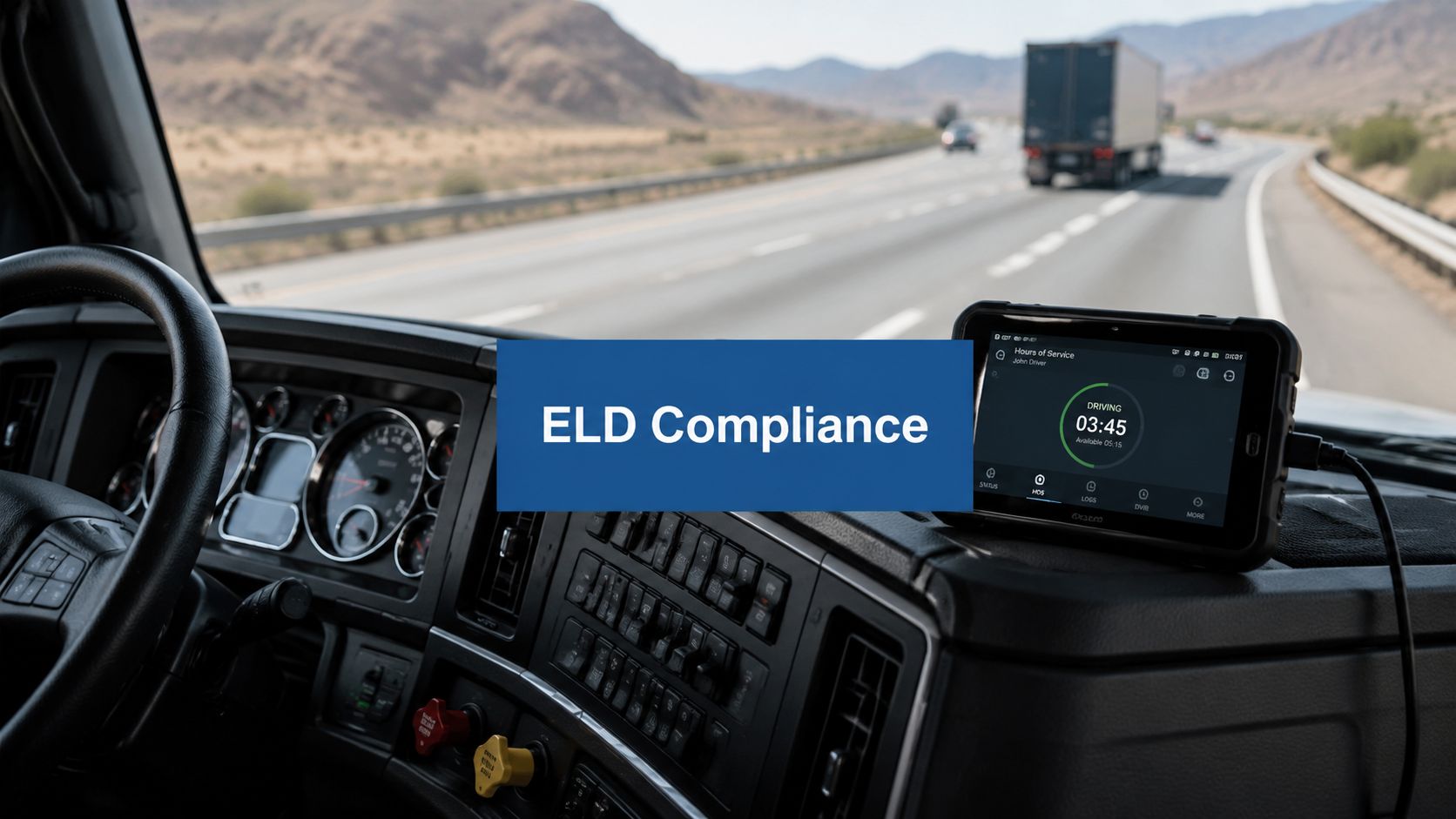
ELD form and manner violations are probably hitting you in the most annoying way possible. You bought the technology, trained your people, and still get a call from the roadside about a “paperwork” issue on a digital log.
That’s the part that catches fleet owners and safety managers off guard. Fleet owners and safety managers often expect ELDs to solve logbook problems. Instead, the mistakes change shape. A missing location, a skipped certification, an edit with no annotation, or a missing instruction sheet in the cab can still turn into a citation. Since your team is busy, those small misses stack up fast.
What’s going on is simple. The device captures a lot, but it doesn’t automatically make your record complete, inspection-ready, and defensible. You still need a process that closes the gaps. If you want a better baseline on e-logs for trucks, start there, then come back to tighten the day-to-day controls that keep these violations off your inspections.
Check out this short video on preventing form and manner violations:
The Hidden Headaches of Modern Logbooks
A fleet owner calls after a roadside stop. The truck has a working ELD. The driver wasn’t over hours. There was no obvious falsification issue. But the inspection still produced a log violation because the record didn’t tell the whole story the inspector needed to see.
That’s how ELD form and manner violations usually show up. Not as dramatic misconduct. Not as a truck running far outside the rules. They show up as incomplete digital records, missing details, poor annotations, or a failure to handle an ELD problem the right way when something goes sideways.
Why these violations keep surprising fleets
The old pain point was paper log quality. You worried about handwriting, line placement, and whether an inspector could even read the page. The modern pain point is different. Your risk now lives in digital completeness.
A driver can be operating in good faith and still create exposure when the log is missing context. The ELD may have the drive time, but the record can still be weak if location details are incomplete, the daily review never happened, or an edit doesn’t explain why it was made.
Small log errors don’t stay small once they start repeating across multiple trucks and multiple inspections.
That’s why these citations frustrate operations teams so much. They don’t feel like “real” safety failures. But they still create work, scrutiny, and score impact.
What usually doesn’t work
Most fleets respond with a one-time reminder that says, “fill everything out correctly.” That rarely fixes the problem. Drivers don’t need a lecture on paperwork. They need a short, repeatable workflow that matches what happens in the cab, at the shipper, and during a roadside inspection.
What works better is narrower and more practical:
- Train around inspection moments so your people know what an officer will ask for and what must be visible.
- Audit for repeat patterns instead of treating each violation as random.
- Separate driver mistakes from device issues so you can coach one and document the other.
If you treat these as minor admin errors, they keep coming back. If you treat them as a workflow problem, you can usually bring them under control.
What Exactly Are ELD Form and Manner Violations
At a practical level, ELD form and manner violations mean your log is missing required information, contains incomplete information, or isn’t presented in the way the rule expects. The ELD can record raw activity, but your record of duty status still has to be complete and inspection-ready.
According to 49 CFR 395.8 requirements summarized here, a compliant record of duty status must include the core information that identifies the trip, the vehicle, the carrier, and the duty-status record itself.

What has to be on the record
According to 49 CFR 395.8 as summarized in this compliance article, a compliant record of duty status must include the date, total miles driven, truck or tractor and trailer numbers, the name of the carrier, the driver’s signature or certification, the 24-hour period starting time, and remarks or annotations needed to describe the driver’s duty status.
In real operations, that means your team can’t rely on the device alone. The system may capture motion and time, but the driver still has to make sure the record makes sense to an inspector reading it cold at roadside.
Here’s where fleets usually get tripped up:
- Missing trip detail such as miles, trailer information, or remarks that explain what happened.
- Weak annotations when edits are made or when duty-status changes need context.
- Unfinished daily review where the log isn’t certified or confirmed while the day is still fresh.
What inspectors are actually checking
Inspectors aren’t just asking whether an ELD is installed. They’re checking whether the record is complete, accurate, and readable in the format required.
That’s an important distinction. A truck can have a compliant device and still produce a noncompliant log.
Practical rule: If a stranger can’t look at your log and understand who drove, what equipment was used, what the duty periods were, and why any unusual change occurred, you still have form-and-manner risk.
This is also why the best fleets don’t train only on buttons and screen taps. They train on record quality. That’s the difference between having ELD hardware and having a log that survives inspection.
Common Form and Manner Citations and How to Spot Them
The most useful way to think about these citations is to look at them like an inspector does. They aren’t trying to reward effort. They’re checking whether the required record is there, current, and complete.
After the ELD mandate took full effect in December 2017, form-and-manner problems shifted away from paper log legibility and toward digital completeness. A compliance summary built from FMCSA enforcement material notes that common citations now include logs that do not include miles traveled, locations, or proper annotations under 49 CFR 395.8, as explained in this Hours of Service violations reference.
If you’ve had a driver swear that “the log looked fine,” this is usually the gap. The screen showed activity. The inspection required a complete legal record.
The patterns that keep showing up
Below is a field-use version of the issues safety teams should watch for.
| Violation Type | Common Inspection Wording | FMCSA Regulation / Violation Code | CSA BASIC | CSA Severity Weight | Why It Matters |
|---|---|---|---|---|---|
| General log form and manner violation | Log violation, general form and manner | 49 CFR 395.8 | Hours-of-Service Compliance | 1 | Usually used for minor recordkeeping defects where the log exists but is not completed correctly. |
| ELD form and manner violation | HOS (ELD) – ELD form and manner | 49 CFR 395.24 | Hours-of-Service Compliance | 1 | Commonly cited for missing or incomplete ELD data elements, such as annotations, location details, trailer number, shipping document number, or other required entries. |
| Missing or incorrect shipping document number | Driver failing to manually input or verify shipping document number | 395.24C2III-ELDSDN | Hours-of-Service Compliance | 1 | This is a common ELD form and manner issue that can usually be prevented with a simple pre-trip ELD review. |
| Driver failed to certify logs | Driver failing to review records and certify the accuracy of the information | 395.30B1-ELDDFR | Hours-of-Service Compliance | 1 | Drivers should certify each daily log after reviewing it for accuracy. |
| Portable ELD not mounted properly | Portable ELD is not mounted in a fixed position and visible to the driver | 395.22G-ELDMFV | Hours-of-Service Compliance | 1 | The ELD must be mounted where the driver can see it from the normal seated driving position. |
| Required ELD instruction materials missing | No user’s manual, instruction sheet, malfunction instructions, or blank graph-grid logs available | 49 CFR 395.22(h) | Hours-of-Service Compliance | 1 | Drivers should have the required ELD information packet available electronically or in paper form, plus blank logs for backup use. |
| Record of duty status not current | Driver’s record of duty status not current | 49 CFR 395.8(f)(1) | Hours-of-Service Compliance | 5 | This is more serious than a basic form and manner defect because the driver’s log is not current to the last duty-status change. |
| No record of duty status | No driver’s record of duty status when one is required | 49 CFR 395.8(a) | Hours-of-Service Compliance | 5 | This is usually treated as an incomplete or missing log issue, not a minor form and manner issue. |
| Missing previous 7 days of logs | Driver failing to retain previous 7 days records of duty status | 49 CFR 395.8(k)(2) | Hours-of-Service Compliance | 5 | Drivers must be able to produce the current day and the prior 7 consecutive days of required records during inspection. |
If you’re trying to reduce false assumptions during log review, this kind of roadside perspective also helps when reviewing how to avoid false log violations.
How to catch them before the officer does
Most fleets don’t need a more complicated policy. They need a faster review routine. The simplest screen for risk is this:
- Check whether the day is certified before the truck gets deep into the next shift.
- Review any edits and make sure the annotation explains the change.
- Spot-check location entries on days with multiple stops, yard moves, or unusual delays.
- Compare the story in the log to the trip you know happened operationally.
A lot of managers focus on over-hours first because it feels more serious. That makes sense, but it can hide the repeat admin errors that inspectors find in seconds.
The citations that feel minor but repeat the most
The frustrating ones are the omissions that seem too small to matter. A driver forgets to complete a field. A co-driver detail is missing. A trailer number was never updated after a swap. A log edit got accepted but not clearly explained.
Those aren’t dramatic mistakes. They are repeatable mistakes. And repeatable mistakes are the ones that spread through a fleet if you don’t coach them at the pattern level.
The True Impact on Your CSA Score and Operations

A lot of fleets still treat form-and-manner issues like harmless paperwork. That’s a mistake. These violations may look minor on the inspection report, but they create operational drag in places you feel every week.
FMCSA guidance notes that even low-severity form-and-manner violations are scored in the CSA Safety Measurement System, and those accumulated points can raise your HOS Compliance BASIC score, leading to more roadside scrutiny, warning letters, and potentially a full compliance review, as outlined in the FMCSA Safety Planner section on HOS compliance.
Where the real cost shows up
The fine is only one part of the problem, and not always the main one. The bigger burden usually lands in your workflow:
- Safety admin time gets pulled into correcting logs, researching what happened, and coaching drivers after the fact.
- Driver downtime increases when your team has to revisit old records instead of keeping current days clean.
- Inspection attention goes up when officers keep seeing HOS-related issues tied to your fleet.
- Internal trust drops because dispatch, safety, and drivers start blaming each other for preventable misses.
That’s why I tell fleet owners to stop thinking of these as “small violations.” The citation may be small. The cleanup usually isn’t.
Low severity doesn’t mean low consequence
When a fleet has repeat log quality issues, the burden spreads beyond the safety desk. Recruiting feels it because new hires inherit weak habits. Operations feels it because roadside delays and follow-up calls interrupt the day. Ownership feels it because every repeated issue signals that the process still isn’t under control.
If you track your safety work accurately, you’ll notice that these issues create more recurring labor than many one-off major events.
A form-and-manner violation is often less about punishment and more about proof that your current workflow leaves too much to memory.
That’s why it helps to monitor your truck driver CSA score and related safety trends. Not because a score tells the whole story, but because repeated HOS documentation issues usually show up there before they show up in a more serious enforcement event.
Why reactive cleanup fails
If your process starts only after a citation, you’re already behind. By then, you’re trying to reconstruct what happened, identify whether the issue came from the driver or the device, and prove that the problem isn’t systemic.
Reactive cleanup also creates inconsistency. One dispatcher chases logs aggressively. Another assumes the driver will fix it later. One safety manager insists on same-day certification. Another lets records age. That inconsistency is what keeps the same “minor” violations alive.
A Practical Plan to Prevent and Correct Violations
The fleets that reduce ELD form and manner violations usually do three things well. They train narrowly, they review quickly, and they keep a reliable backup process in every truck.
The FMCSA requires every commercial vehicle using an ELD to carry an onboard information packet that includes a user manual, data transfer instructions, malfunction reporting procedures, and at least 8 days of blank paper logs for emergencies, according to FMCSA’s general information about the ELD rule. That requirement matters because a device issue turns into a citation fast if the fallback process isn’t ready.
Build a short prevention routine
This doesn’t need to become a giant compliance program. It does need to become routine.
-
Start with the driver’s end-of-day closeout
Your driver should know exactly what “done for the day” means in your fleet. Not parked and walking away. Certified log, reviewed edits, and any unusual event annotated while it’s still fresh.
-
Run a next-morning exception check
Your safety or dispatch team should review for uncertified logs, odd edits, missing trip details, and anything that doesn’t match the actual movement of the truck.
-
Escalate only repeat behavior
Don’t turn every missed annotation into a major disciplinary event. Correct one-offs fast. Reserve formal coaching for patterns.
Keep a malfunction process that works in real life
A written policy is not enough if nobody can use it under pressure. Every truck needs a cab packet that is complete and current, and your people need to know where it is without digging.
Use a simple cab checklist:
- User manual present
- Data transfer instructions present
- Malfunction reporting sheet present
- Blank paper logs for the required emergency period present
- Driver knows who to call if the transfer fails at roadside
If you’re preparing for a challenge or correction process, internal guidance on FMCSA DataQs and dispute handling can help your team organize the record after the fact. But the best fix is still preventing the bad inspection in the first place.
Audit the way inspectors think
Don’t audit randomly. Audit by failure pattern.
Review logs tied to:
- Trailer swaps
- Short trips with many duty changes
- Borderline days with edits
- ELD malfunctions or transfer problems
- Drivers who recently changed equipment or apps
If a driver has to remember a complicated rule from memory at the end of a long shift, your process is too fragile.
The best coaching is specific. Show the exact log. Show the exact missing field or weak annotation. Then give the driver a one-minute fix they can repeat tomorrow.
Automate Compliance with My Safety Manager
Manual review works for a while. Then the fleet grows, inspections keep happening, and your team ends up chasing yesterday’s log problems instead of controlling today’s risk.
That’s where software and managed compliance support help. The right setup should show you which records need attention before roadside does. You want visibility into uncertified logs, log edits, unresolved events, and recurring patterns by driver or truck.

What good automation should actually do
A lot of platforms advertise compliance. That doesn’t mean they help with form-and-manner control. The useful ones do a few practical things:
- Flag records that aren’t certified
- Surface missing or weak log details before they age
- Separate driver behavior from possible device failures
- Give your office team a clean follow-up queue instead of forcing them to hunt record by record
For fleets seeking managed oversight and a compliance dashboard, My Safety Manager offers one solution. The value isn’t hype. It’s having a system that helps your team spot problems early, organize follow-up, and keep the workflow consistent across trucks, dispatch, and safety.
Why this matters for smaller fleets too
A smaller fleet can get hit harder by these issues because the same person is often owner, dispatcher, safety manager, and problem-solver. If you’re handling everything yourself, low-level log errors can chew up time you need for hiring, customer work, and equipment issues.
Automation doesn’t replace accountability. It supports it. Your drivers still need to certify and annotate correctly. Your office still needs to review exceptions. But a visible queue beats memory every time.
The main win is consistency. When the same items get checked the same way every day, form-and-manner violations stop being random surprises.
Frequently Asked Questions
| Question | Answer |
|---|---|
| What are ELD form and manner violations? | They are violations tied to incomplete, inaccurate, or improperly presented records of duty status on an ELD log. |
| Are these violations just paperwork issues? | No. They can affect your CSA standing, trigger more scrutiny, and create extra admin work across your fleet. |
| What information must appear on a compliant log? | The required record includes items such as the date, total miles driven, vehicle identification, carrier name, driver certification, the 24-hour period starting time, and remarks or annotations needed to describe duty status. |
| Can you get a violation even if the ELD is working? | Yes. A working device does not guarantee a complete or properly documented log. |
| What are common examples of form-and-manner problems? | Missing miles, missing locations, weak or missing annotations, uncertified records, and incomplete trip details are common examples. |
| What should be in the cab for ELD compliance? | The cab should have the ELD user manual, data transfer instructions, malfunction reporting procedures, and blank paper logs for emergency use. |
| What happens if the ELD malfunctions? | Your driver needs to follow the malfunction process promptly and use the required backup paper logs if needed. |
| How do you reduce repeat violations? | Use narrow driver coaching, next-day exception review, and audits focused on repeat patterns rather than broad reminders. |
| Should safety managers review every log daily? | Review by exception is usually more efficient, but high-risk records should be checked quickly while details are still fresh. |
| What is the biggest mistake fleets make? | Treating small digital errors as harmless admin issues instead of fixing the workflow that causes them. |
Regulatory References
Here are direct federal regulations you should keep bookmarked for internal training, policy review, and roadside prep. If you're also looking at the bigger legal picture, this explainer on how federal regulations affect truck accidents is a useful plain-English companion to the rule text.
| Regulation | Link |
|---|---|
| 49 CFR 395.8 Records of duty status | View on eCFR |
| 49 CFR 395.22 Motor carrier responsibilities for ELDs | View on eCFR |
| 49 CFR 395.24 Driver responsibilities for ELD operation | View on eCFR |
| 49 CFR 395.34 ELD malfunctions and data diagnostic events | View on eCFR |
If you want help tightening your log review process, monitoring problem patterns, and reducing avoidable HOS paperwork exposure, take a look at My Safety Manager. It gives you a practical way to keep compliance organized without building a bigger in-house burden.
