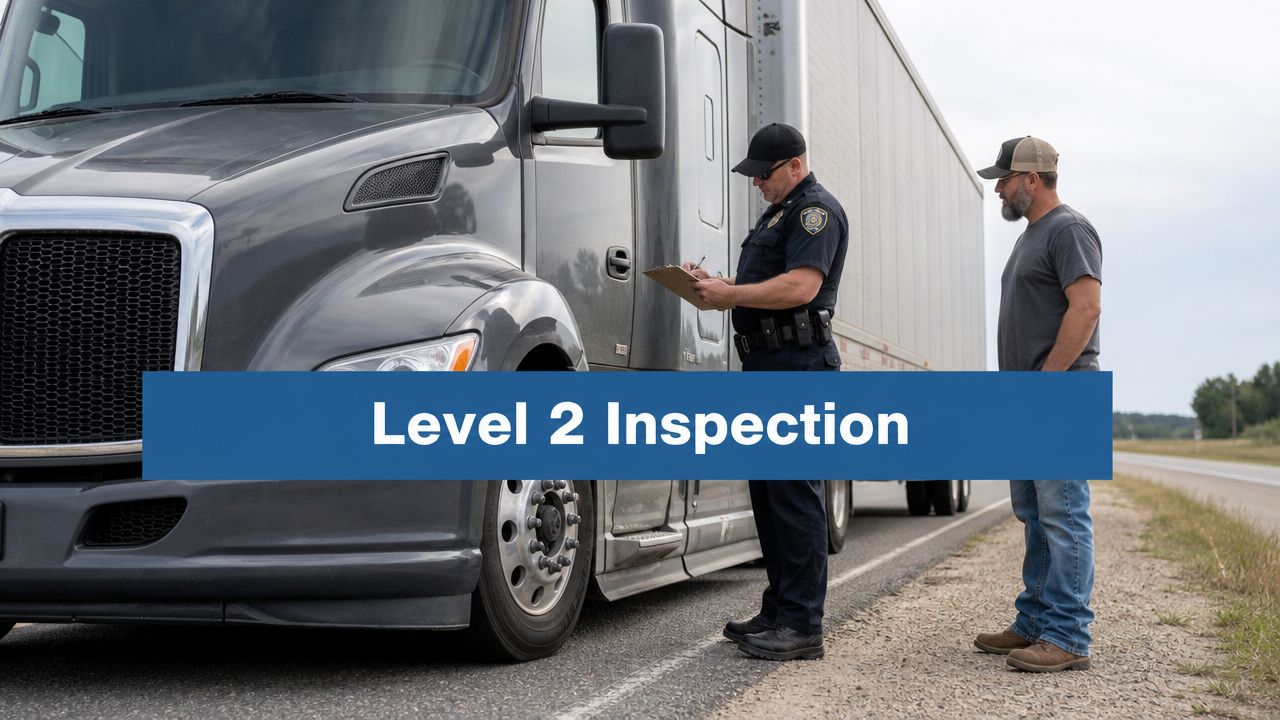
A DOT Level 2 inspection is a Walk-Around Driver/Vehicle Inspection that covers everything visible and all driver documents without the officer going under your truck, and it typically takes about 30 minutes. The hidden risk is paperwork: logbook violations account for over 30% of all Level 2 failures, and 42% of cited Level 2 violations in the last 12 months involved HOS discrepancies.
DOT Level 2 inspection issues usually hit when you're busy, short on time, and assuming your truck is fine because nothing feels mechanically wrong. For you as a fleet owner or safety manager, that's exactly why this inspection causes problems. The walk-around format makes people think it's lighter, easier, or mostly about lights and tires.
That's where fleets get burned. You can send out a clean-looking tractor, have a decent pre-trip culture, and still end up with violations because your driver's records, visible equipment, or in-cab items don't line up with what the officer sees in a few minutes. Small mismatches become enforcement issues fast.
What matters is understanding the scope. A Level 2 inspection is visual, document-heavy, and built to catch what's in plain sight. If you treat it like a simple walk-around checklist, you'll miss the traps that cause failures.
Passing Your Next DOT Level 2 Inspection
When an officer lights you up for an inspection, the clock starts immediately. Your truck is off schedule, your customer still expects the load, and your CSA exposure can change based on a handful of details that should have been caught before dispatch.
Most Level 2 problems don't start at the roadside. They start in the yard when your process depends too much on habit and not enough on a repeatable standard. If your pre-trip is rushed, your document storage is sloppy, or your driver can't put hands on what the officer asks for right away, you've already made the stop harder than it needs to be.
A good Level 2 strategy is simple. Build your routine around what the officer can see and verify. If you want a broader inspection framework for your fleet, use this DOT truck inspection guide as a baseline and tailor your daily checks to visible items and driver records.
What passing usually comes down to
- Fast document access: Your driver should be able to present CDL, medical certification if required, logs, and related paperwork without digging through a pile.
- Clean visible condition: Lights, tires, mirrors, windshield, wipers, reflectors, and obvious leaks need to be checked the same way every day.
- Cab readiness: Seat belt, fire extinguisher, warning devices, and general cab condition need to be in place and serviceable.
- Professional interaction: A calm, organized driver changes the tone of the stop.
Practical rule: Train your people to prepare for what can be seen in the first few minutes, not what they hope the officer skips.
What works and what doesn't
What works is a short daily process your drivers can repeat under pressure. What doesn't is handing out a long generic checklist that nobody uses once dispatch gets busy.
You don't need a complicated program to improve inspection outcomes. You need a field-ready routine that matches real roadside enforcement.
What Exactly Is a Level 2 Inspection
A driver gets stopped for a routine roadside check. The truck looks decent from ten feet away, but the officer finds a light out, a missing extinguisher tag, and a log detail that does not match the supporting records. That stop can turn into multiple violations fast. That is the primary risk in a Level 2 inspection. Small paperwork mistakes often become bigger problems once the visible condition of the truck gives the officer a reason to look harder.
A Level 2 DOT inspection is the Walk-Around Driver/Vehicle Inspection.

The name matters because it defines the scope. The officer reviews the driver, checks documents, and inspects vehicle items that are visible without going underneath the unit. In practice, that puts the pressure on two areas fleets often separate when they should not: driver record accuracy and walk-around condition.
A Level 2 inspection usually covers:
- Driver qualification and operating documents: CDL, medical card when required, hours-of-service records, and related paperwork
- In-cab safety items: seat belt, fire extinguisher, warning devices, and other equipment the officer can verify from the cab area
- Visible vehicle condition: lights, tires, wheels, rims, mirrors, glass, wipers, coupling equipment, and other observable parts of the truck and trailer
What it does not include is just as important. The officer does not perform the under-vehicle portion of a full North American Standard inspection during a standard Level 2. Items that require getting under the truck, such as detailed brake component checks that are not visible from a normal walk-around, are outside the normal scope. For a side-by-side view of where the full inspection goes further, review this Level 1 DOT inspection overview.
Do not treat that narrower scope as a break.
Level 2 inspections are common because they fit real roadside enforcement. They can be done faster than a full under-vehicle inspection, and that makes them effective for weigh stations, traffic stops, and targeted enforcement details. For fleet owners, the trade-off is straightforward. You may avoid the deeper mechanical review on a given stop, but you face more exposure if your visible maintenance and driver paperwork are inconsistent.
That is the hidden trap. A driver can have a truck that looks serviceable and still fail the stop because the logs, shipping information, or supporting documents do not line up cleanly. I see this often. An officer starts with a walk-around, spots one visible defect, then gives the records extra attention. Minor logbook errors stop looking minor once the rest of the stop has already raised concern.
A Level 2 inspection is narrower than Level 1, but it still tests whether your operation is controlled day to day. If your drivers cannot keep records clean and your equipment cannot pass a visible walk-around at any time, this inspection will expose it.
The Complete Level 2 Inspection Checklist
If you want your team to pass more often, stop thinking about the inspection as one event. Think about it as three separate reviews: your driver's paperwork, your cab setup, and your exterior walk-around.

A usable field reference helps. This DOT truck inspection checklist is a good starting point, but your daily routine should match the exact way a Level 2 inspection is conducted.
Driver documents you need ready
This is the first area where inspections go sideways. If your driver can't produce records quickly, the stop gets longer and the officer starts looking harder.
Check these before dispatch:
- CDL status: Make sure the license is valid, current, and appropriate for the unit and operation.
- Medical certification: If your operation requires it, verify it's current and available.
- Hours of Service records: Your ELD display, supporting paperwork, and any required backup records should be current and consistent.
- Company and vehicle paperwork: Registration, permits when needed, and any other required operating documents should be organized in one place.
In-cab items officers can verify fast
The cab tells an officer a lot about your culture. A messy cab doesn't automatically create a violation, but it often leads to more friction because required items are harder to locate and equipment is easier to miss.
Use this in-cab check before leaving the yard:
- Seat belt condition: Present, functional, and not damaged.
- Fire extinguisher: Properly mounted and serviceable.
- Warning devices: Emergency triangles are present and stored where your driver can reach them.
- Cab visibility: Windshield area clear enough that paperwork and controls can be reviewed without confusion.
Keep all roadside documents in one consistent location in every truck. Your driver shouldn't have to remember where a different manager stored them last week.
Exterior walk-around items
Many fleets concentrate their efforts here. They're right to do that, but only if the walk-around is disciplined and not rushed.
Start at the front and move the same direction every time. Don't improvise. That's how things get skipped.
Front of tractor
- Headlights and markers: Confirm operation, mounting, and lens condition.
- Windshield and wipers: Look for cracks that affect visibility and wipers that won't clear properly.
- Mirrors: Secure, properly positioned, and not broken.
- License plate and identifiers: Visible and not obstructed.
Along the sides
- Tires: Look for obvious wear, damage, cuts, bulges, or inflation issues.
- Wheels and rims: Watch for cracks, visible damage, or missing hardware.
- Fuel system: Check caps, tank security, and visible leaks.
- Reflective tape and lighting: Side markers and conspicuity materials need to be intact and visible.
Rear of tractor and trailer connection
- Air and electrical lines: Secure and not dragging.
- Fifth wheel and coupling area: Properly connected, visually secure, and free of obvious defects.
- Mud flaps and rear lighting: Present and in working order where applicable.
Trailer walk-around
- Trailer lights: Brake, turn, marker, and tail lights should all function.
- Doors and latches: Close properly and show no obvious damage.
- Cargo securement: What's visible needs to look stable and compliant.
- Body condition: Large tears, broken panels, or obvious hazards should be corrected before dispatch.
A checklist is only useful if it's realistic
A long checklist that takes too long won't get used consistently. A short checklist that skips paperwork won't protect you.
The best routine is one your drivers can complete every day without guessing. Standardize the order. Require proof that it was done. Then spot-check it in the yard so your process holds up when enforcement tests it.
Common Violations and Their Costly Penalties
A driver gets stopped with a clean-looking unit, good tires, working lights, and no obvious equipment problem. Ten minutes later, the inspection report still comes back ugly because the log has a gap, the shipping papers do not line up with duty status, or the ELD record raises questions the officer did not have at first.
That is one of the hidden traps in a Level 2 inspection. The walk-around starts with visible equipment, but minor recordkeeping mistakes often change the tone of the stop fast. Once an officer finds a logbook inconsistency, the inspection usually gets more detailed, not less. A simple paperwork miss can expose a wider maintenance or supervision problem.
FMCSA's roadside inspection program consistently cites both driver recordkeeping and visible equipment defects among the violations inspectors find during enforcement activity. You can review current violation categories and inspection results through FMCSA's roadside inspection and enforcement resources rather than relying on anecdotal summaries.

Why small log errors become expensive
Officers do not treat HOS errors as harmless clerical mistakes if the record suggests the driver was operating beyond the rules or if supporting documents do not match. That is where fleets get burned.
Common triggers include:
- Missing required entries: A blank field or incomplete duty status record invites follow-up questions.
- Timeline conflicts: Fuel receipts, bills of lading, dispatch records, and ELD events need to match the trip.
- Unassigned or edited ELD data: Edits without a clear explanation can create suspicion fast.
- Paper backup errors: If a driver switches to paper during an ELD issue, the paper log still has to be done correctly.
- Form and manner defects: Some are lower severity. Repeated sloppiness still signals weak control.
I see this mistake often. Fleets spend money fixing visible defects in the shop, then lose the inspection on a record that should have been caught before dispatch.
Top Level 2 violations and CSA point severity
The table below gives you practical numbers to train against. CSA severity weights can vary by the exact subsection, whether the violation is acute or critical, and whether it contributes to an out-of-service condition, but these point values are the ranges fleets commonly track in roadside enforcement review.
| Violation Description | Regulation (49 CFR) | CSA Points |
|---|---|---|
| Inaccurate or incomplete record of duty status | 49 CFR §395.8 | 1 to 7 points |
| False report of driver's record of duty status | 49 CFR §395.8(e) | 7 points |
| Driver failing to have required ELD or log supporting documents | 49 CFR Part 395 | 1 to 5 points |
| Tire condition problems visible during walk-around | 49 CFR §393.75 | 2 to 8 points |
| Missing or ineffective warning devices | 49 CFR §392.22 | 4 to 6 points |
| Equipment not properly inspected, repaired, or maintained | 49 CFR §396.3 | 5 points |
| Inoperative required lamps or visible lighting defects | 49 CFR Part 393, Subpart B | 2 to 6 points |
If you are reviewing what can put a vehicle or driver out of service, keep this DOT out-of-service violations list in your safety files.
Where fleets should focus first
Start with the violations that combine high frequency with easy prevention. HOS accuracy is near the top of that list because one bad log can turn a routine inspection into a deeper review of dispatch practices, supervision, and trip planning. After that, fix the visible items officers can confirm in seconds, especially lights, tires, and warning devices.
There is also a spec issue many fleets miss with trailers. If your operation handles intermodal or container work, equipment choice affects what officers see during a Level 2 walk-around. Problems tied to fit, securement setup, or trailer condition often start earlier, during procurement and assignment, which is why operations teams should spend time on selecting the right container trailers.
The penalty is not just a fine. CSA exposure goes up, roadside history gets worse, and your driver loses time on the shoulder while a preventable issue gets documented. That cost shows up later in insurance, shipper scrutiny, and repeat inspection risk.
Your Practical Pre-Inspection Game Plan
Most fleets don't need more policies. You need a routine your drivers can realistically follow and a manager review that catches problems before enforcement does.
A strong pre-inspection plan has two parts. One happens at the truck. The other happens in your office before a weak pattern becomes a roadside violation.
Your driver routine before every dispatch
Keep it simple enough that it happens every day.
Start with the logs
Before your driver touches the truck, verify the current duty status, required entries, and supporting information. Don't treat the log as a back-office detail.Use a fixed walk-around path
Front bumper, driver side, coupling area, trailer side, rear, then back around. Same order every time. That reduces missed lights, tire defects, and coupling issues.Check document access
Your driver should be able to hand over the right paperwork immediately. A binder, folder, or standardized in-cab document holder works better than loose papers in multiple compartments.Inspect what an officer can see from standing height
A Level 2 inspection rewards disciplined visual checks. Train your drivers to pause, step back, and look at the unit the way an officer will.
Your manager routine every week
A safety process breaks down when nobody verifies it.
- Run spot checks: Pull a few units at random and inspect them as if they were already on the shoulder.
- Review HOS consistency: Compare what your systems show against what your drivers are recording.
- Track recurring equipment defects: If the same light or tire issue keeps coming back, that's a process failure, not bad luck.
- Match equipment to the operation: Trailer choice affects visibility, securement practices, and walk-around problem areas. If your business handles container work, this guide on selecting the right container trailers is a useful operational reference because equipment setup changes what your team needs to inspect.
For a broader daily process, use this DOT pre-trip inspection resource to standardize expectations across your fleet.
What pays off
The best fleets make inspection readiness boring. No scrambling. No guessing. No hunting for paperwork while the officer waits.
That kind of consistency lowers stress for your drivers and removes a lot of preventable violations from your operation.
Handling a Roadside Inspection and Aftermath
When the stop happens, your driver's behavior matters almost as much as the truck's condition. Officers notice whether your driver is organized, respectful, and able to follow instructions without creating extra friction.
Your driver doesn't need to be overly talkative. They need to be professional. Answer what's asked. Provide requested documents. Don't argue on the shoulder.
During the inspection
A good roadside approach looks like this:
- Stay calm: Nervous rushing causes mistakes.
- Follow instructions exactly: If the officer asks for documents, hand over documents. Don't start explaining unrelated issues.
- Avoid volunteering extra information: Short, accurate answers are usually best.
- Keep the truck accessible: Make it easy for the officer to complete the walk-around without confusion or delay.
Treat the roadside stop like an audit, not a debate. Your goal is accuracy and composure.
After the officer finishes
The Driver Vehicle Examination Report, often called the DVER, is your report card for the stop. Read it carefully. Don't toss it in the cab and move on.
Look for:
- Violation descriptions that don't match the actual condition
- Driver or vehicle identification errors
- Items marked incorrectly
- Repair obligations that need immediate follow-up
If the report is accurate, correct the issue fast and document what you did. Keep records together so your office can show a clean response if questions come up later.
If you believe the report is wrong
Challenge it properly. Don't rely on a phone call or verbal complaint. Review the DVER, gather your records, photos, repair documents, and supporting information, then use the DataQ process to dispute errors through the formal channel.
That step matters because inspection data affects how your company is viewed. If bad data sits unchallenged, it can keep hurting you long after the roadside stop is over.
Simplify Compliance with My Safety Manager
Managing DOT compliance gets messy when your team relies on spreadsheets, paper files, and memory. Level 2 inspections expose that fast. Missing documents, expired credentials, inconsistent HOS records, and weak maintenance follow-up all show up at the worst time.

If you're trying to scale a fleet without adding constant admin stress, a managed compliance system is usually the smarter move. You need one place to track driver qualification files, document expirations, maintenance status, and CSA-related follow-up instead of chasing those items across emails and folders.
Where the workload usually breaks
- Driver files fall behind: Renewals, medical cards, and qualification records get handled late.
- Inspection follow-up is inconsistent: Someone fixes the truck, but the paperwork trail is incomplete.
- Managers spend time reacting: Instead of preventing violations, your team is cleaning up after them.
Why managed support helps
My Safety Manager is built for fleets that need structure without building a large internal compliance department. The platform and service model help you keep documents organized, monitor issues earlier, and maintain a clearer view of where your risk is building.
If you're tired of managing roadside exposure one stop at a time, a stronger system is worth it. The cost of disorganization usually shows up long before anyone notices it in the office.
Frequently Asked Questions
A Level 2 inspection catches fleets off guard for one reason. It looks limited from the roadside, but officers can connect a small paperwork problem to what they see on the truck in minutes. That is why minor logbook mistakes often turn into larger violations during a walk-around.
How long does a DOT Level 2 inspection take?
Plan for a short stop that can grow if the officer finds missing documents, unclear HOS records, or visible equipment issues. A clean driver file and organized cab usually keep the inspection moving.
Is a Level 2 inspection the same as a Level 1?
No. A Level 2 is a walk-around driver and vehicle inspection. The officer checks the driver, the paperwork, and visible vehicle items without going under the truck.
Can you be placed out of service from a Level 2 inspection?
Yes. Drivers get placed out of service for problems tied to qualification, hours of service, or other violations that prevent legal operation. Vehicles can also be sidelined if the officer sees a defect serious enough to create an immediate safety risk.
What is checked in a DOT Level 2 inspection?
Expect a review of the driver's license, medical certificate when required, record of duty status, and other operating documents. On the vehicle side, the officer looks at items visible during a walk-around, such as lights, tires, brakes, load securement, and required emergency equipment in the cab.
What makes a Level 2 inspection different?
The difference is visibility. The inspection is limited to what the officer can review in the cab and see from the outside, but that still covers enough ground to expose weak habits fast.
Are logbooks a major risk in a Level 2 inspection?
Yes. This is one of the hidden traps. A driver may have a truck that looks road-ready, but an incomplete log, an unassigned drive time issue, or a mismatch between the log and supporting documents can shift the stop in a bad direction. I see fleets focus on equipment and overlook record accuracy. Inspectors do not.
Do warnings from an inspection still matter?
Yes. A warning is still an inspection event, and it still tells you where your process is breaking. Smart fleets treat warnings as early notice, then correct the root issue before the next stop turns into a citation or out-of-service order.
What should your driver do during a roadside inspection?
Stay calm. Be respectful, hand over documents promptly, and answer what is asked without guessing or arguing. If a document is hard to find, that alone signals poor control, so set the cab up in a way that lets the driver produce records quickly and consistently.
Regulatory References
Here are the main federal regulations tied to the issues discussed above:
- 49 CFR §393.75 Tires
- 49 CFR §395.8 Driver's record of duty status
- 49 CFR §396.3 Inspection, repair, and maintenance
- 49 CFR §392.22 Emergency signals and stopped commercial motor vehicles
If you want less guesswork and a cleaner compliance process, take a look at My Safety Manager. It gives you practical support for driver qualification, CSA monitoring, document control, and the day-to-day compliance work that keeps Level 2 inspections from turning into bigger problems.
