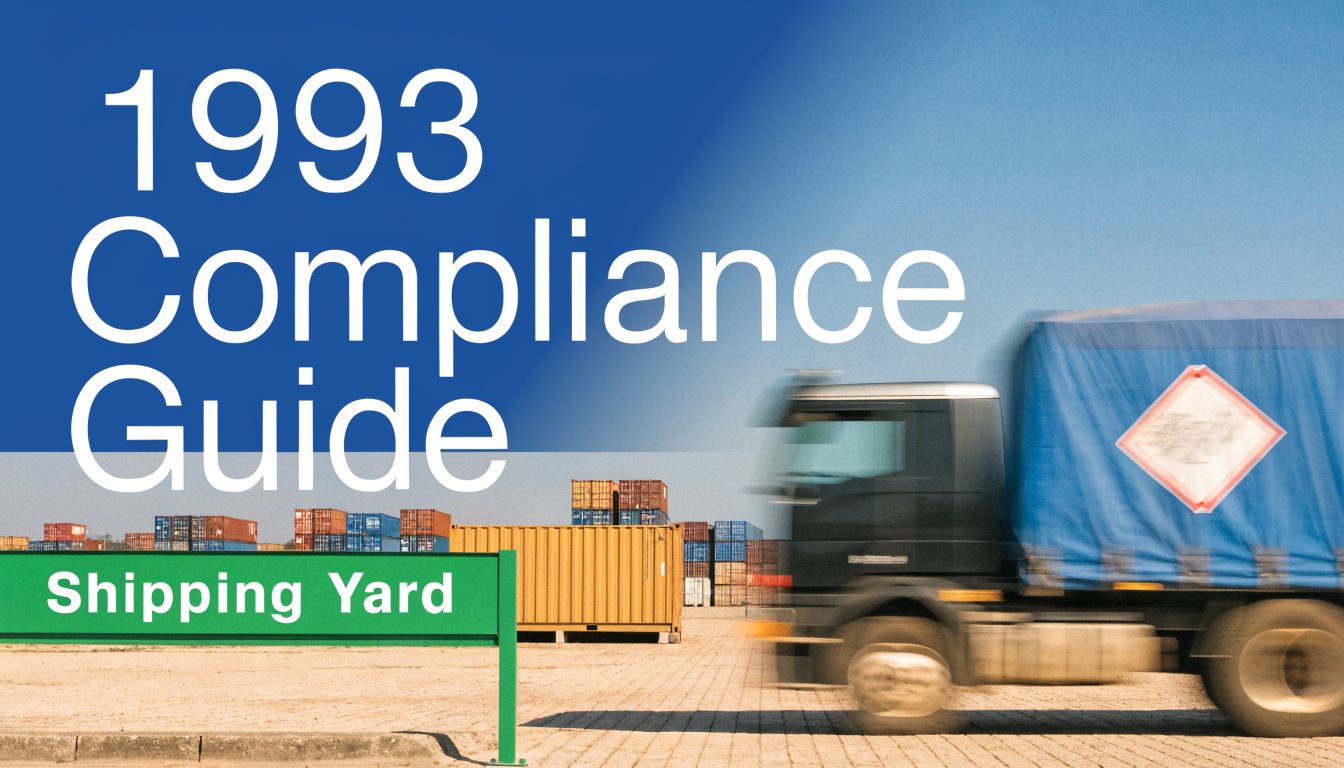
1993 hazardous material is one of those categories that can create expensive problems fast if your paperwork, placards, or driver instructions are even slightly off. If you manage a fleet, you already know the pain point. The load looks routine until an inspection, a mixed-fuel question, or a shipping paper error turns it into a compliance event.
What usually goes wrong is simple. You get a broad shipping description, a shipper uses a generic name, someone assumes the placard rule is obvious, and your driver leaves with documents that don’t line up cleanly with what’s on the trailer. That’s where violations start. It’s also where emergency response gets harder if something happens on the road.
The challenge with 1993 hazardous material is that UN/NA 1993 is a catch-all entry, so you can’t treat it like a simple one-product rule. You need the classification, packing group, documentation, placarding, training, and emergency response pieces to match. This guide gives you the practical version of that job so you can check a load before it moves and avoid the mistakes that cost time, money, and trust.
Your Guide to Shipping 1993 Hazardous Material
The stakes behind hazmat transport are real. In 1993, the EPA’s Toxics Release Inventory documented over 2.8 billion pounds of listed toxic chemicals released into the environment, which is a useful reminder of why safe transport controls matter at every handoff in the supply chain, from shipper to carrier to receiver (EPA TRI data).
For you as a fleet owner or safety manager, that translates into a basic truth. A hazmat load isn’t just a freight movement. It’s a regulated movement where a bad description, a missing placard, or weak driver preparation can create both enforcement exposure and a real-world safety problem.
Where fleets usually get tripped up
Three trouble spots show up again and again in day-to-day operations:
- Broad product descriptions: The shipper gives you a vague product name, and nobody confirms whether UN 1993 is the right entry.
- Last-minute paperwork checks: The truck is ready to leave, but the shipping description, packing group, or emergency response details haven’t been reviewed closely.
- Assumptions about placards: Someone thinks “flammable liquid” is enough, but the details of package type, weight threshold, or mixed loads change what has to be displayed.
Practical rule: If the load can’t survive a roadside document check before the wheels turn, it isn’t ready to move.
What good compliance looks like
Strong hazmat operations are boring in the best way. The classification is verified. The shipping paper is clean. The placards are visible and correct. The driver knows what’s in the trailer and what to do if something leaks, burns, or gets rejected at inspection.
That’s the standard you want. Not just technical compliance, but repeatable compliance.
What Exactly Is UN/NA 1993
UN/NA 1993 designates “Flammable liquid, n.o.s.” in Hazard Class 3, and it covers liquids with a flash point up to 60°C (140°F) under the DOT hazardous materials framework (FMCSA hazmat compliance guidance). The phrase “n.o.s.” means not otherwise specified, which is where much of the confusion starts.
In practice, that means you’re dealing with a generic entry used when the material doesn’t fit a more specific name in the Hazardous Materials Table. That’s useful, but it also means you can’t get lazy. Generic entries demand more discipline because the shipping name alone doesn’t tell your driver, an inspector, or a responder exactly what chemical is in the package.
What n.o.s. means for your operation
When a product ships under UN 1993, you should treat it as a signal to slow down and verify the supporting details. A broad entry can still be correct, but only if the shipper has classified the product properly.
Your review should focus on:
- Flash point: Does the product fit the Class 3 threshold?
- Proper shipping name: Is “Flammable liquid, n.o.s.” the correct table entry for this product?
- Packing group: Does the shipper identify the right level of hazard?
- Any technical or product-specific information: If the product has known characteristics that affect handling, your team needs that before dispatch.
Packing group matters
For UN 1993, the packing group changes the risk picture and the packaging rules that may apply. It also affects how seriously you should audit the load before it moves.
A practical way to think about it is simple. The packing group tells you how aggressive the hazard is within the same hazard class. If your dispatcher, shipping clerk, or safety team skips that detail, they’re leaving a gap in the file.
| Attribute | Specification |
|---|---|
| Proper shipping name | Flammable liquid, n.o.s. |
| ID number | UN/NA 1993 |
| Hazard class | Class 3 |
| Flash point scope | Up to 60°C (140°F) |
| Common use issue | Broad generic entry that requires careful classification review |
| Placard trigger for non-bulk | Red Class 3 placard required over 1,001 lbs aggregate gross weight in non-bulk packaging |
| Typical fleet concern | Shipping paper accuracy, package compatibility, placarding, and driver awareness |
A generic entry is never a shortcut. It’s a sign that your review needs to be tighter, not looser.
Another point fleet managers miss is the operational threshold. For non-bulk packaging, the red Class 3 placard becomes mandatory at more than 1,001 lbs aggregate gross weight, which is a common issue on LTL and multi-stop freight where the load doesn’t look like a classic tanker move.
Shipping Paper and Documentation Requirements
Shipping papers are where a lot of preventable violations begin. If your team can’t read the basic description quickly and confirm it matches the load, you’re asking for trouble at the scale house or during an incident review.
For a UN 1993 shipment, the basic description must appear in the correct sequence. A common format is:
UN1993, Flammable liquids, n.o.s., 3, PG III
That sequence matters because it gives enforcement and emergency personnel the information in the order they expect to see it. If you also want a plain-language refresher on how shipping documents fit into freight operations generally, this guide for logistics operations is a useful companion to your hazmat paperwork process.
What you should verify before dispatch
Use a repeatable audit, not a visual skim.
- Identification number: Confirm the document lists the correct UN or NA number.
- Proper shipping name: Make sure it matches the authorized entry, not a warehouse nickname.
- Hazard class and packing group: These should line up with the classification the shipper is using.
- Emergency response details: The contact information needs to be available and legible.
- Shipper certification: Don’t accept incomplete hazmat papers and hope it works out later.
A good practice is to have dispatch or safety compare the shipping paper against the SDS and the package marks before the driver leaves. If one says UN 1993 and the other points to a more specific entry, stop and resolve it.
What doesn’t work
What doesn’t work is relying on the customer’s confidence. It also doesn’t work to assume the bill of lading is enough just because the freight is packaged and sealed.
For a more detailed hazmat-specific audit process, keep your team aligned around a dedicated DOT hazmat shipping papers checklist. The fastest way to get cited is to move a load that nobody fully reviewed.
Labeling and Placarding Your Truck for UN 1993
Placarding is simple until it isn’t. The rule sounds straightforward, but the details matter because inspectors don’t grade on intent. They look at what’s on the vehicle, whether it’s visible, and whether it matches the load.

For UN 1993 in non-bulk packaging, the key threshold is more than 1,001 lbs aggregate gross weight, which triggers the red Class 3 placard. On an American-style semi-truck, that means making sure the placards are displayed where required and remain visible for the whole trip.
What your truck should show
The Class 3 placard is the red flammable liquid placard. Depending on how the material is offered and the applicable marking rules, the identification number may also need to appear in the placard or on an orange panel.
Check these basics every time:
- All required sides are covered: Don’t let one damaged or missing placard turn a compliant load into a citation.
- Placards are secure and readable: Dirt, torn corners, or poor mounting can still create enforcement issues.
- Packages inside the trailer are labeled correctly: Vehicle placards and package labels are not interchangeable.
A practical fleet check
If your trailer carries mixed freight, have your loader and your driver confirm the total hazmat weight before leaving the dock. That’s where many fleets miss the placard trigger.
You can tighten that process with a dedicated hazmat placard requirements resource so dispatch, shop, and operations use the same standard. Placarding failures usually aren’t caused by hard rules. They’re caused by poor handoffs.
Emergency Response and ERG Guide 128
When a UN 1993 load is involved in a spill, fire, or crash, your driver’s first few decisions matter more than any policy binder sitting back at the office. They need the right shipping papers, accessible emergency response information, and a simple mental checklist.

For flammable liquids under this type of entry, ERG Guide 128 is the key field reference. Your driver doesn’t need to become a hazmat chemist on the shoulder. They need to recognize the fire risk, protect themselves, secure the area as best they can, and get good information into the hands of responders.
What your driver should do first
The first response priorities are practical:
- Stop in the safest available location if movement is still possible and safe.
- Keep people away from the area.
- Identify the material using shipping papers and package markings.
- Call emergency services and provide the exact shipping description.
- Avoid improvised spill or fire control unless training and conditions clearly support it.
If your fleet handles packaged flammable liquids regularly, it also helps to standardize onboard spill response supplies and containment planning. This overview of Material Handling USA for spill containment is useful for thinking through absorbents, secondary containment, and control tools that fit real-world fleet operations.
Keep the shipping papers where your driver can reach them quickly and where responders can find them if your driver is injured or away from the cab.
What you should train for
Focus your training on the first ten minutes, not just regulatory vocabulary. Drivers need to know when to isolate the scene, when not to touch leaking packages, and how to relay accurate information without guessing.
What works is repetition. Review actual scenarios from your operation. A drum leak at a consignee, a trailer fire risk after a tire failure, a mixed-freight spill at a dock. Those are the moments where ERG familiarity turns into safer action.
Driver Training and Recordkeeping for Hazmat
Hazmat training isn’t paperwork theater. It’s one of the few controls you have that directly affects what happens when a load is accepted, moved, inspected, or involved in an incident.
From 1993 to 2001, transportation-related incidents accounted for 27.5% of more than 53,000 hazardous substance emergencies tracked in 17 states, which is a strong reminder that highway transport is a major part of the risk picture (ATSDR HSEES summary). If your people touch hazmat freight, your training program needs to be current and documented.

What your hazmat training should include
Under 49 CFR 172.704, the training framework includes several pieces that work together:
- General awareness: Your employees need to understand the hazmat system and how to recognize regulated material.
- Function-specific training: The loader, dispatcher, shipping clerk, and driver each need training tied to what they do.
- Safety training: This covers hazard recognition, protective measures, and emergency response basics.
- Security awareness: Your team needs to understand security risks related to hazardous materials.
If a driver is hauling placarded loads, make sure your qualification file and endorsement review are current. This hazardous materials endorsement resource is a helpful reference point for that side of the equation.
What good records look like
Training records should be easy to retrieve, easy to read, and tied to the employee’s actual job duties. Don’t keep scattered certificates in email folders and call it a system.
Use a training file that shows:
- the employee’s name
- the completion date
- the training topics covered
- who provided or verified the training
The best training record is the one you can produce immediately during an audit.
What doesn’t work is mass assigning generic hazmat videos without checking whether the person loads, marks, documents, or drives the material differently. Auditors and investigators care about job function. You should too.
Common Exemptions You Should Know
Hazmat rules aren’t identical for every movement, but exemptions are where fleets get overconfident. If your team uses an exception without checking the exact conditions, you can turn a manageable load into a clean violation.
Materials of trade
The materials of trade exception is often misunderstood. It generally applies to small amounts of hazardous material carried in support of a business task, not to regular for-hire freight operations moving customer loads through the transportation system.
That means it may fit a service truck carrying limited jobsite supplies. It usually won’t fit your standard freight move just because the quantity feels small.
Limited quantity and consumer-style shipments
Smaller consumer-packaged products can sometimes move under reduced requirements if they meet the applicable limited quantity conditions. The mistake is assuming any small package qualifies. It has to be packaged, marked, and offered correctly.
Use this rule of thumb:
- If you’re hauling standard customer freight for compensation, assume the full hazmat rules apply until you verify otherwise.
- If someone says “it’s exempt,” ask which exception, under what condition, and how the package is marked.
A lot of bad compliance decisions start with a casual phrase from a shipper or warehouse lead. Exceptions are narrow. Treat them that way.
The Challenge of Mixed Loads with Diesel Fuel
Mixed loads create some of the most common and avoidable placarding mistakes in fleet operations. This is especially true when one compartment or one part of the load contains a lower flashpoint product than the rest.
PHMSA guidance makes the key point clearly. When you’re shipping NA1993 diesel with a lower flashpoint material such as gasoline (UN1203), you must display the ID number for the most volatile substance, not the one that makes up most of the load (PHMSA interpretation 18-0096).
What that means in practice
If you have a cargo tank with mostly diesel and another compartment with gasoline, or even residue from the lower flashpoint material, your placarding decision can change. The common mistake is to label based on the majority product. That isn’t the correct approach in the mixed-load scenario addressed by PHMSA.
Think of it this way:
- If the lower flashpoint material is present in the relevant placarding context, use the more hazardous ID display rule.
- Don’t let dispatch decide this from memory. Verify the exact load condition.
Where fleets get burned
The failure usually happens at the handoff between loading and paperwork. Operations knows what was in the tank. The shipping papers show the current product. Nobody pauses to consider whether residue or compartment mix changes the display requirement.
That’s why mixed fuel loads need a specific review step. Not a general hazmat review. A mixed-load review.
Your Practical UN 1993 Compliance Checklist
A compliance checklist works best when it mirrors what your operation does before, during, and after loading. For UN 1993, the key is to catch mismatches early, before the driver is on the road explaining avoidable problems to an inspector.

Pre-trip checks
Before loading or departure, confirm the basics that support every later step.
- Vehicle condition: Check brakes, tires, lights, and required safety equipment.
- Driver status: Confirm the driver is properly qualified for the load and understands what’s being hauled.
- Route review: Make sure the planned route doesn’t create avoidable hazmat restrictions or surprises.
If your operation stores related flammable or combustible products before loading, remember that OSHA-linked handling expectations matter on the facility side too. For combustible liquids like some UN 1993 materials, storage controls include FM-approved cabinets and ventilation of at least 1 cfm per square foot of floor area (FHSA guidance summary).
Loading checks
The load itself needs physical verification, not just document review.
- Package integrity: Look for leaks, dents, failed closures, or bad overpacks.
- Blocking and bracing: Packages should not shift under normal transportation conditions.
- Segregation: Keep incompatible materials apart and don’t rely on “it should be fine.”
Documentation verification
You combine the freight, the truck, and the paperwork.
- Confirm the shipping description matches the load.
- Verify emergency response information is available.
- Check that required placards are present and visible.
- Review any mixed-load issue before release.
A documented hazmat inspection checklist can help your team use the same process every time. The checklist doesn’t need to be fancy. It needs to be used.
Frequently Asked Questions about UN 1993
What does UN 1993 mean
UN 1993 is the DOT hazardous materials table entry for Flammable liquid, n.o.s. It’s a Class 3 entry used for certain flammable liquids that don’t fall under a more specific proper shipping name.
What does n.o.s. mean on a hazmat shipment
It means not otherwise specified. In practice, it tells you the material is moving under a generic shipping description, so you need to verify the classification carefully.
When do you need a placard for UN 1993
For non-bulk packaging, the red Class 3 placard is required when the aggregate gross weight is more than 1,001 lbs for the shipment, as noted earlier in this guide.
Does your driver need a hazmat endorsement for UN 1993
If the load requires placarding, you should confirm your driver’s hazmat endorsement and qualification status before dispatch. Don’t assume a CDL alone is enough.
What should a shipping paper description look like for UN 1993
A typical basic description is:
UN1993, Flammable liquids, n.o.s., 3, PG III
The exact packing group and any supplemental details depend on the material being shipped.
Is UN 1993 the same as NA1993
They’re related identifiers used in hazardous materials transportation, but you should use the exact identification number authorized for the specific material and movement. Don’t substitute casually.
Can diesel and gasoline on the same load change your placard display
Yes. If a lower flashpoint material such as gasoline is part of the relevant mixed-load situation, the ID display requirement can shift to the more volatile substance.
What emergency guide applies to UN 1993
For flammable liquids in this category, ERG Guide 128 is the standard emergency response reference discussed in this guide.
Can small quantities of 1993 hazardous material be exempt
Sometimes, but only if the shipment meets a specific exception such as a limited quantity or materials of trade provision. Never assume “small” means “exempt.”
What’s the biggest mistake fleets make with UN 1993
Treating it like a simple product code instead of a broad hazard entry. The mistakes usually show up in classification, shipping papers, mixed-load placarding, or driver preparation.
Regulatory References
Use the official regulation text when you need to confirm exact wording or settle a disagreement internally.
- 49 CFR 172.101 Hazardous Materials Table
- 49 CFR 172.204 Shipper’s certification
- 49 CFR 172.704 Training requirements
- 49 CFR 177.848 Segregation of hazardous materials
- 49 CFR Part 397 Transportation of hazardous materials driving and parking rules
Streamline Your Hazmat Compliance Today
Hazmat compliance gets messy because the work lives across dispatch, loading, training, maintenance, and driver qualification. That’s why many fleets struggle to keep it consistent across locations and shifts. If you’re also thinking about the broader challenge of managing compliance for frontline teams, the same lesson applies here. Systems beat memory.
My Safety Manager was built for fleets that need a practical way to stay ahead of DOT requirements without adding more admin burden. For $49 per driver per month, you get support for driver qualification, CSA score management, drug and alcohol program administration, and fleet compliance workflows that help you stay organized and audit-ready.
If you want a simpler way to manage hazmat paperwork, driver files, training status, and DOT compliance in one place, take a look at My Safety Manager. It’s built for fleet owners and safety managers who need clear oversight, fewer compliance surprises, and a safer operation.
